AI, Agentic Work & the Future of Organizations
How agentic systems reshape work design, decision rights, and the shape of the enterprise itself.
Speaking & Advisory
Steven Soares works with leaders and organizations at the intersection of AI, organizational transformation, workforce strategy, knowledge management, leadership, and human performance. Engagements range from executive keynotes and leadership sessions to focused advisory and consulting projects designed to solve complex organizational challenges.
Keynotes, briefings, workshops, and facilitated leadership conversations.
Focused, senior-level support on defined strategic initiatives.
Speaking
Steven delivers keynotes, executive briefings, leadership workshops, and facilitated conversations designed to help leaders understand emerging shifts and translate them into organizational action.
How agentic systems reshape work design, decision rights, and the shape of the enterprise itself.
Designing the division of labor between people and intelligent systems — and the capability shift it demands.
What leadership becomes when agents absorb the routine and judgment becomes the scarce resource.
Why knowledge architecture, not model selection, decides who compounds advantage with AI.
Lessons from Fortune 100 transformation: clarity, sequencing, and removing the real constraint.
The operating habits that turn strategy into consistent, repeatable execution.
Aligning talent systems, structures, and experience with where the business is actually going.
Strengths-based leadership and the conditions that make high performance durable.
On Stage
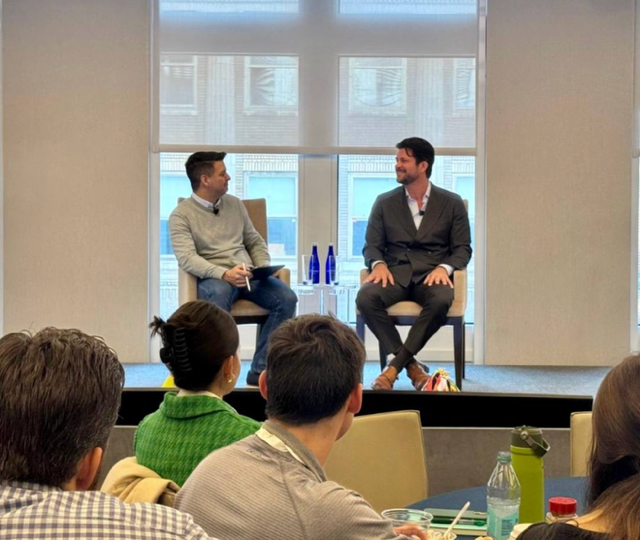
Fireside · Executive Audience
Translating strategy, AI, and organizational intelligence into language leaders can act on.
Advisory
For organizations navigating transformation, Steven provides focused advisory and consulting support on strategic initiatives where technology, people, operating models, and organizational performance intersect.
Engagements are designed around clearly defined business problems and can range from executive advisory and strategic assessments to workshops, operating-model design, transformation roadmaps, and targeted project-based consulting.
Determine where AI and agentic capabilities can meaningfully reshape work, operating models, decision-making, and customer or employee experiences.
Modernize knowledge ecosystems so information can effectively serve employees, AI agents, workflows, and intelligent systems.
Advise leaders on how workforce models, talent systems, structures, and employee experiences should evolve as business models and technologies change.
Support complex transformations by connecting strategy, operating models, leadership alignment, adoption, and execution.
Work with leadership teams to improve execution, decision-making, accountability, resilience, and organizational performance.
Develop the capabilities required to successfully adopt new technologies, operating models, and ways of working.
SPX+ Coaching
One-on-one executive coaching for senior leaders navigating complexity, scale, and change. Grounded in organizational psychology and twenty years of enterprise leadership, coaching engagements focus on executive judgment, influence, operating discipline, and leading through ambiguity. Available as standalone engagements or alongside advisory work.
Engagement Model
Ongoing or periodic advisory support for senior leaders navigating strategic organizational, workforce, AI, or transformation decisions.
Defined consulting engagements addressing a specific organizational challenge, opportunity, or transformation initiative.
High-impact working sessions that bring leadership teams together to evaluate opportunities, make decisions, and develop actionable strategies.
Keynotes, executive briefings, panels, leadership meetings, and facilitated conversations.
Advisory Engagement Model
Advisory work should not end with a recommendation deck.
My approach connects diagnosis, organizational context, strategy, and execution—so the work produces decisions, operating mechanisms, and measurable movement.
Separate signal from noise.
Clarify the business challenge, strategic opportunity, decision to be made, stakeholders involved, and outcomes that matter most. This stage establishes the real question behind the presenting problem—and identifies the constraints most likely to determine success.
Typical outputs
Understand the system before redesigning it.
Assess how the organization operates today across people, process, technology, data, knowledge, incentives, governance, and organizational dynamics. The objective is not simply to document the current state. It is to identify where friction, fragmentation, capability gaps, or structural constraints are limiting performance.
Typical outputs
Turn insight into a deliberate operating choice.
Design the strategy, operating model, intervention, workflow, governance structure, or transformation path required to achieve the desired outcome. Recommendations are tested against feasibility, organizational readiness, adoption, risk, and measurable business value.
Typical outputs
Convert strategy into accountable motion.
Translate the recommended direction into decisions, ownership, sequencing, governance, milestones, and an operating cadence that can sustain execution. Where appropriate, I remain engaged through activation to help leadership move from agreement to implementation.
Typical outputs
The Outcome
Every engagement is designed to leave the organization with more than insight: clearer decisions, stronger operating mechanisms, greater organizational alignment, and a practical path forward.
Positioning
Steven's work sits at the intersection of technology transformation and organizational psychology. That perspective enables him to approach transformation not simply as a technology problem or a people problem, but as an operating-system challenge involving strategy, processes, technology, knowledge, leadership, behavior, and workforce capability.
His experience spans enterprise AI and intelligent operations, knowledge management, workforce transformation, organizational development, executive learning, performance management, and leadership development.
AI • Agentic Systems • Intelligent Operations • Automation • Knowledge
Operating Models • Workforce Strategy • Change • Talent • Learning
Leadership • Organizational Psychology • Resilience • Strengths • Execution
If your organization is navigating AI adoption, workforce transformation, knowledge modernization, organizational change, or another challenge at the intersection of people, technology, and performance, let's explore whether an advisory engagement would be valuable.
Navigation